
A personal account of resilience, recovery and realistic goal setting in 2026
Introduction
Every fitness journey comes with its fair share of challenges. For some, it is the discipline of maintaining a consistent workout routine. For others, it is the mental battle of staying motivated when progress feels slow. For me, the past two weeks have been a true test of commitment, not because I gave up, but because life, and my body, had other plans.
I am a 36 year old Singaporean male, and at the start of 2026, I made a firm decision to take my health seriously. My goals were clear: lose weight, build muscle and improve my overall well-being. What I did not anticipate was how quickly setbacks would arrive, and more importantly, how I would respond to them.
Setting Up for Success: The Home Gym
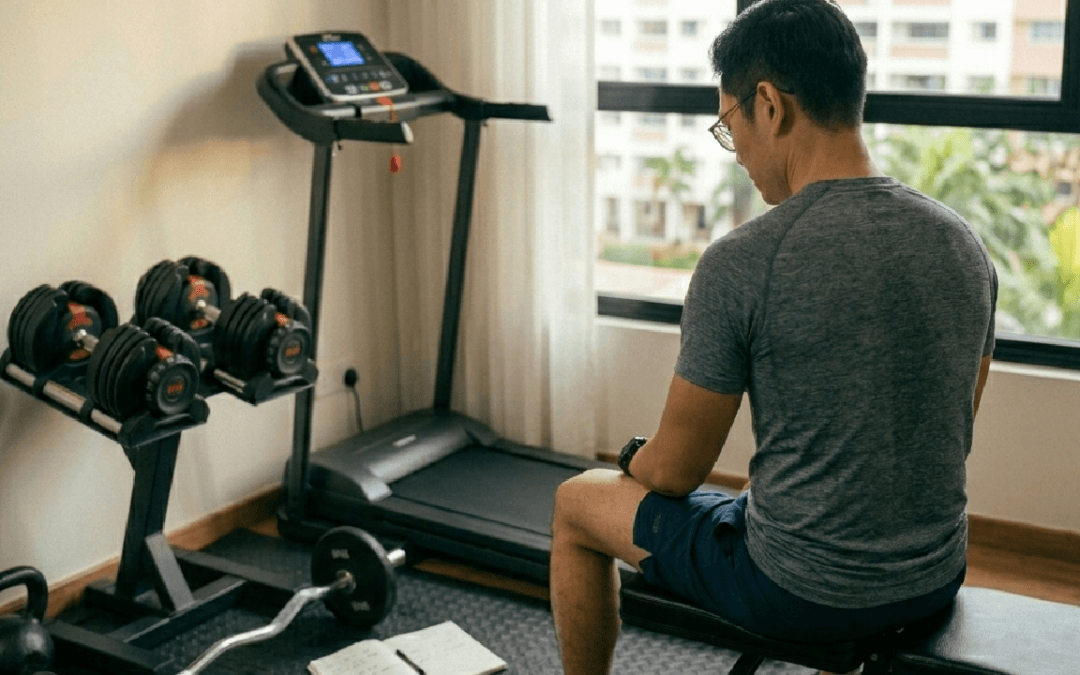
One of the first decisions I made in 2026 was to remove every excuse I had for not exercising. As someone who dislikes travelling to the gym, I invested in setting up a dedicated workout space in my own room. My home gym currently includes a treadmill, adjustable dumbbells, an adjustable bench, an adjustable EZ bar, an adjustable kettlebell and, most recently, a thick floor mat sourced from Shopee and Lazada.
This setup gave me the flexibility to train on my own schedule, without the commute and without any barriers. The investment in home gym equipment is one of the best decisions I have made, and it reflects a key principle in fitness: remove the friction between you and your workout.
Starting weight in early 2026: 98 kg
Current weight as of end of April 2026: 91 kg
That is a 7 kg reduction in approximately four months, which is a healthy and sustainable rate of fat loss.
The Setbacks: What Happened in the Past Two Weeks
Progress rarely moves in a straight line, and my experience over the past fortnight is proof of that.
Back Injury
It began with a back injury sustained approximately two weeks ago. Rather than pushing through the pain, which is a common but dangerous mistake, I made the responsible decision to stop weight training entirely. According to Synergy Physiotherapy Singapore, lumbar strains from improper lifting are among the most common gym injuries locally, and exercising through a back injury without professional clearance can lead to long term damage, including herniated discs or muscle tears. Rest was the right call.
Finger Cramping Sensation
After three days of rest, I experienced an unusual cramping or clamping sensation in my fingers. While this may have been related to dehydration, reduced physical activity or nerve sensitivity, I chose to pause for a further three days until the sensation fully resolved. Listening to your body is not a sign of weakness. It is a sign of intelligence and long term thinking.
Busy Schedule and Life Commitments
Following my recovery period, a demanding personal schedule required my full attention, resulting in several additional days away from training. Life does not pause for fitness goals. Acknowledging this reality is important, as it helps individuals plan more realistically and avoid the guilt that often accompanies unplanned rest days.
Cut Finger
The most recent setback was a deep cut on my finger, which has made weight training temporarily unsafe. Gripping barbells, dumbbells or an EZ bar with an open wound risks infection and delays healing. As a result, weight training remains on hold until the injury is fully healed.
What I Did Right: Maintaining My Diet
Despite two consecutive weeks without weight training, I did not abandon my nutrition plan. I continued with a strict diet and consistent calorie counting throughout the entire recovery period.
This is a critical point worth emphasising. Nutrition accounts for the majority of body composition results. According to the National Health Service (NHS) UK, weight management is predominantly driven by caloric intake rather than exercise output alone. Maintaining your diet strictly during a training break can still result in continued weight reduction.
This experience reinforces an important message: a setback in training does not have to become a setback in progress. Protecting your nutrition during periods of injury or rest is one of the most powerful things you can do for your long term results.
Yes, there are moments of hunger, particularly before bedtime. But I have come to understand that controlled hunger is part of the process. Every uncomfortable moment is a signal that the body is working through its reserves.
Why Setbacks Should Not Stop You
Setbacks are not failures. They are a normal and expected part of any fitness journey, particularly for individuals who are new to structured training or who are managing the realities of a busy lifestyle alongside their health goals.
According to the Mayo Clinic, expecting setbacks and having strategies in place to work through them is what separates those who succeed long term from those who quit. In simple terms, being prepared for disruption makes you more likely to continue, not less.
Here are key mindset shifts that help during a setback:
Separate training from nutrition. If you cannot train, protect your diet. Do not let one disrupted area sabotage another.
Rest is productive. Muscle recovery and tissue repair happen during rest, not during the workout itself. Forced rest due to injury, when respected, can actually improve your physical condition.
Progress is not always visible. The scale may not move every week. Energy levels, sleep quality and mental clarity are also valid markers of progress.
Short term disruption does not erase long term progress. Two weeks off does not undo four months of consistent effort.
The Plan Going Forward
Once I have fully recovered from my current injuries, I will resume weight training progressively. The plan remains unchanged: build muscle, reduce body fat and improve overall fitness throughout 2026.
My updated goals for the remainder of the year:
Target weight by end of 2026: 75 kg
Remaining weight to lose: approximately 16 kg over eight months
This is an achievable target. According to the National Health Service (NHS) UK weight loss guidelines, a sustainable rate of fat loss sits between 0.5 kg and 1 kg per week. At that pace, reaching 75 kg by December 2026 is realistic and safe.
Frequently Asked Questions
How do I stay on track with my fitness goals after an injury?
The key is to separate what you cannot do from what you still can. If weight training is off limits due to an injury, protect your nutrition, maintain your calorie targets and focus on light movement such as walking. Progress does not stop simply because one element of your routine is paused. According to the Mayo Clinic, expecting setbacks and having strategies in place to work through them is what separates those who succeed from those who quit.
Will taking two weeks off from weight training cause me to lose muscle?
Research suggests that noticeable muscle loss, known as muscle atrophy, generally does not occur until after approximately two to three weeks of complete inactivity for trained individuals. A two week break due to injury, when paired with adequate protein intake and calorie management, is unlikely to result in significant muscle loss. You may experience some reduction in strength and endurance, but these recover relatively quickly once training resumes.
Can I still lose weight without exercising?
Yes. Weight loss is primarily driven by a caloric deficit, meaning you consume fewer calories than your body burns. Exercise supports and accelerates fat loss, but nutrition is the foundation. According to the National Health Service (NHS) UK, a safe and sustainable rate of weight loss is 0.5 to 1 kg per week, achievable through dietary changes alone or in combination with physical activity.
Is it safe to exercise with a back injury?
This depends entirely on the type and severity of the injury. For minor muscular strains, light movement and stretching may aid recovery. However, for more significant back injuries, it is advisable to rest and seek professional guidance before resuming any form of resistance training. According to Synergy Physiotherapy Singapore, lumbar strains from improper lifting are among the most common gym injuries locally, and returning to training too early without proper recovery can worsen the condition significantly.
How do I set up an effective home gym on a budget in Singapore?
Start with versatile, space saving equipment. Adjustable dumbbells, an adjustable bench and a resistance band set cover the majority of compound and isolation exercises needed for both muscle building and fat loss. Platforms such as Shopee and Lazada offer competitive pricing on home gym equipment in Singapore, making it accessible without requiring a large upfront investment. A thick floor mat is a practical and affordable addition that protects both your flooring and your joints during floor based exercises.
How realistic is it to lose 23 kg in one year?
Losing 23 kg over 12 months works out to approximately 1.9 kg per month, or just under 0.5 kg per week. According to the National Health Service (NHS) UK weight loss guidelines, a safe and sustainable rate of weight loss is 0.5 kg to 1 kg per week, which means a target of 23 kg over one year falls within a healthy and achievable range, provided calorie intake is managed consistently and physical activity is maintained throughout.
Conclusion
The past two weeks have tested my resolve, but they have not broken it. A back injury, unusual physical symptoms, a demanding schedule and a cut finger all arrived at once, yet the journey continues. Weight is still dropping. The diet remains on track. The home gym is ready and waiting.
To anyone reading this who is navigating their own setbacks: do not let a difficult week, or even a difficult month, convince you to stop entirely. Fitness is a long term commitment, and the individuals who succeed are not those who never face obstacles. They are the ones who find a way to keep going, even when progress looks different from what they planned.
The road to 75 kg continues. And I am looking forward to meeting a healthier version of myself by the end of this year.